
Session type: Plenary
- Thursday, 7 May
- 17:30 - 18:30 EEST
Chairs:
Branka Marinović

Lidia Rudnicka
Every year, the EADV Spring Symposium provides an exceptional opportunity for networking, bringing together healthcare professionals passionate about advancing their expertise and careers at a leading European event dedicated to skin and venereal health. This year’s dynamic scientific programme, carefully designed to meet the needs of both early-career and experienced dermatologists and venereologists, highlights the latest advances in the field, featuring more than 25 sessions and over 100 distinguished speakers. Chaired by Prof. Branka Marinovic (EADV President) and Prof. Dr. Lidia Rudnicka (Scientific Programming Chair), today’s Plenary Session featured two keynote lectures from leading scientists and experts in dermatology. Opening the session, Prof. Marinovic reflected on the significance of this year’s location: “For 2026, we have chosen the inspiring setting of Athens, a city universally regarded as the cradle of Western civilisation, where scientific inquiry, medicine, and philosophy first flourished. This historic backdrop provides a fitting environment for scientific exchange and reflection on the evolution of medical knowledge.”
“The scientific programme, curated by the newly appointed Scientific Programming Chair Professor Lidia Rudnicka and leading experts, promises to cover a broad spectrum of topics through a carefully selected range of sessions.”
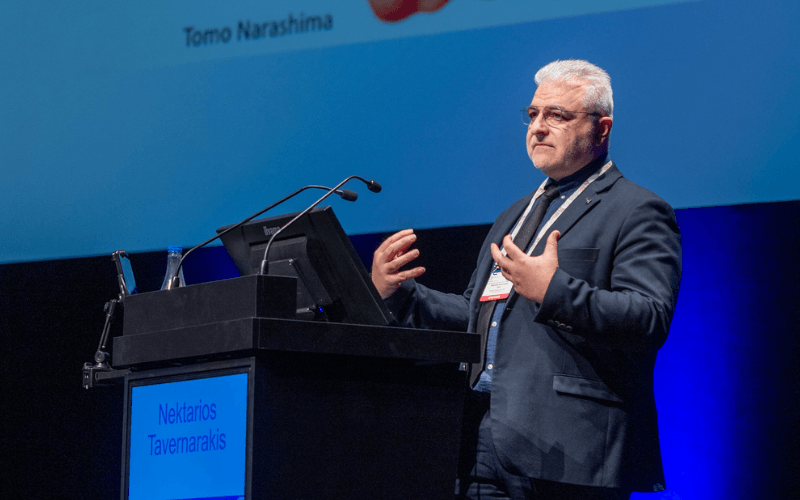
From novel mechanisms of ageing to new therapeutic interventions
Prof. Nektarios Tavernarakis, Professor of Molecular Systems Biology at the Medical School of the University of Crete, delivered the first keynote lecture titled, ‘From novel mechanisms of ageing to new therapeutic interventions.’
Prof. Tavernarakis discussed the role of mitochondrial quality control in ageing and stress resistance, highlighting how the accumulation of damaged mitochondria contributes to cellular decline and age-related pathology. He described how mitophagy and mitochondrial biogenesis operate within a coordinated homeostatic feedback loop that regulates mitochondrial content and maintains cellular function.
Prof. Tavernarakis concluded that defective mitochondrial clearance represents a pivotal event in senescent decline and identified mitophagy as a promising therapeutic target for age-associated diseases.
Ageing is driven by the inexorable and stochastic accumulation of damage in biomolecules vital for proper cellular function. Although this process is fundamentally haphazard and uncontrollable, senescent decline and ageing is broadly influenced by genetic and extrinsic factors. It is becoming increasingly apparent that most such interventions ultimately interface with cellular stress response mechanisms, suggesting that longevity is intimately related to the ability of the organism to effectively cope with both intrinsic and extrinsic stress. Key determinants of this capacity are the molecular mechanisms that link ageing to main stress response pathways, and mediate age-related changes in the effectiveness of the response to stress. Mitochondria, the indispensable and highly dynamic, energy-generating organelles in all eukaryotic cells, play essential roles in fundamental cellular processes. Aberrant accumulation of mitochondria in disparate cell types is a shared hallmark of many human pathologies and ageing. How mitochondrial biogenesis coordinates with the removal of damaged or superfluous mitochondria to maintain cellular homeostasis is not well understood. We found that mitophagy, a selective type of autophagy targeting mitochondria for degradation, interfaces with mitochondrial biogenesis to regulate mitochondrial content. Impairment of mitophagy compromises stress resistance and triggers mitochondrial retrograde signalling. These observations reveal a homeostatic feedback loop that integrates metabolic signals to coordinate the biogenesis and turnover of mitochondria. Uncoupling of these two processes during ageing contributes to overproliferation of damaged mitochondria and decline of cellular function. Our findings suggest that impaired removal of damaged mitochondria is a pivotal event in ageing and senescent decline, highlighting mitophagy as a potential target for therapeutic intervention against age-associated pathologies.
Learning objectives:
- Selective mitochondrial autophagy (mitophagy) is required for stress resistance and longevity.
- Cells coordinate mitophagy and mitochondrial biogenesis to regulate mitochondrial content.
- Mitophagy impairment has been implicated in several human pathologies, highlighting mitophagy as a potential target for therapeutic intervention.
Prof. Nektarios Tavernarakis
Heraklion, Greece
Nektarios Tavernarakis is Professor of Molecular Systems Biology at the Medical School of the University of Crete, in Heraklion, Greece, and Distinguished Member of the Foundation for Research and Technology-Hellas (FORTH). He is also Research Director at the Institute of Molecular Biology and Biotechnology (IMBB) of FORTH, where he is heading the Neurogenetics and Ageing laboratory. He is currently serving as President of the European Molecular Biology Conference (EMBC). He has served as President of the Board of Directors of FORTH, President of the European Institute of Innovation and Technology (EIT) Governing Board, Vice President of the Scientific Council of the European Research Council (ERC), and Director of IMBB. He is also the Founder and first Director of the Graduate Program on BioInformatics at the University of Crete. He is a member of the American Association for the Advancement of Science (AAAS), the European Molecular Biology Organization (EMBO), the German National Academy of Sciences (Leopoldina), the European Academy of Sciences and Arts (EASA), Academia Europaea, the European Academy of Sciences (EurASc) and the Academy of Athens. He earned his Ph.D. degree at the University of Crete, and trained as a postdoctoral researcher at Rutgers University in New Jersey, USA. His work focuses on the molecular mechanisms of necrotic cell death and neurodegeneration, the interplay between cellular metabolism and ageing, the mechanisms of sensory transduction and integration by the nervous system, and the development of novel genetic tools for biomedical research. He has published numerous scientific papers in top-tier, cross-discipline, international scientific journals, in addition to invited book chapters, and other publications, including editorials, commentaries, and science-popularizing articles. For his scientific accomplishments, he has received several notable scientific prizes, including two ERC Advanced Investigator Grants, and an innovation-supporting ERC Proof of Concept Grant. He is the recipient of the EMBO Young Investigator award, the Alexander von Humboldt Foundation, Friedrich Wilhelm Bessel research award, the Helmholtz International Fellow Award, and the Datta Medal of the Federation of European Biochemical Societies (FEBS).He has received the Doctor Honoris Causa distinction of the Ionian University Department of Informatics.He is also the recipient of the Scientific Prize for Medicine and Biology, and the Excellence in Biomedical Sciences Award, of the Bodossaki Foundation, which are two of the most competitive scientific distinctions for Greeks, in Greece and abroad. In addition, he has received the BioMedical Research Award of the Academy of Athens, the Galien Scientific Research Award, the Empeirikeion Foundation Academic Excellence Prize, the FORTH Research Excellence award, and the International Human Frontier in Science Program Organization (HFSPO) long-term Postdoctoral Fellowship.
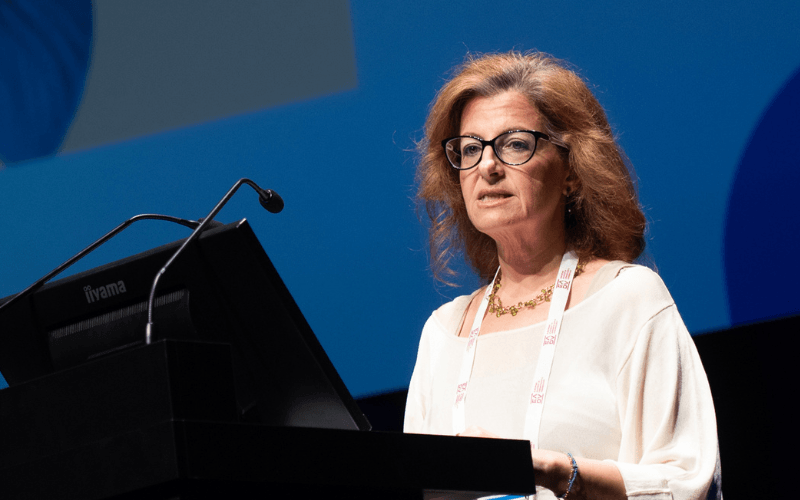
Beauty and dermatology practices in Ancient Greece
This presentation will start with the definition of beauty in the ancient Greek world, the beauty standards and will explain how much physical appearance really mattered. For the western civilization the aspects of beauty, as these were materialized in the ancient Greek world and will be reviewed in this presentation constitute aesthetic achievements that still remain relevant and have given rise to expressions such as “classic beauty”, “classic appeal” or “body of a Greek god” and “body like a Greek statue”.
The presentation will then focus on one of the weapons that ancient people -especially women- employed to enhance their natural appearance: cosmetics. Although not as advanced as today’s dermatological practices, ancient Greeks had methods to improve the appearance of their skin as well as a few implements to help them. Skin creams, moisturizing creams, vanishing creams and lotions have their ancient counterparts. Skin exfoliation and hydration were widely used and still constitute diachronic methods of beautification. These ancient dermatology practices not only strived to better one’s physical form but also tried to heal issues such as psoriasis, dandruff, dry skin and hangnails to name a few.
The second keynote was delivered by Dr. Lydia Trakatelli, who took delegates on a fascinating journey through beauty and dermatological practices in Ancient Greece, bridging historical perspectives with contemporary practice.
Dr. Trakatelli outlined how classical Greek ideals continue to influence modern perceptions of aesthetics through expressions such as “classic beauty” and “the body of a Greek god”. Discussing the importance of cosmetics and skincare practices in the ancient world, particularly among women, she described the use of early creams, lotions, exfoliation and hydration techniques to enhance and maintain the skin.
The presentation also highlighted how ancient dermatological practices extended beyond beautification to address conditions including psoriasis, dandruff, dry skin and hangnails, demonstrating an early understanding of both cosmetic and therapeutic skincare.
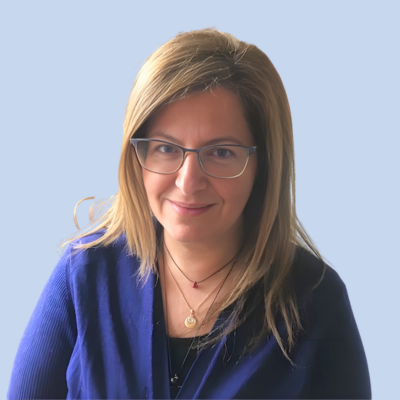
PhD Lydia Trakatelli
Athens, Greece
Lydia-Antonia Trakatelli was born in Thessaloniki, Greece in 1975. She studied Classical Archaeology in the Aristotle University of Thessaloniki (AUTH), where she also continued her post-graduate studies (Msc and PhD) specializing in the field of Hellenistic Pottery.
She participated in the University’s excavation in Vergina as a student (1997) and continued working there taking part in excavation expeditions at the Sanctuary of Eykleia, the theater, the Sanctuary of Kyveli and the ancient necropolis. During the years 2000-2009 she also participated in the University’s excavation expeditions at the site of Kastri in Grevena, Greece. She has published scientific articles in archaeological journals and collective volumes (Festschrift).
Since 2014 she works in the Acropolis Museum in Athens studying and documenting its artifacts. She was in charge of creating an online educational kids game named “Rock-Chisel-Scribble” regarding Ancient Greek Inscriptions which will soon be available on the Acropolis Museum website. She has also participated in the creation of two more applications (Inscriptions from the Erechtheion and Discovering the Acropolis Inscriptions) that were developed under the program “Creation of the Digital Acropolis Museum” as well as a small video displayed today in the Acropolis Museum Parthenon Gallery regarding the lost chryselephantine statue of Athena Parthenos. Working on various archaeological matters concerning the museum’s exhibits dr. Trakatelli is always capable of finding the beauty hidden in the remnants of the past and tries to bring them forward and share them with others.