

Session type: What's new
- Thursday, 7 May
- 15:45 - 17:15 EEST
- Trianti Hall

Mechanisms of bullous diseases
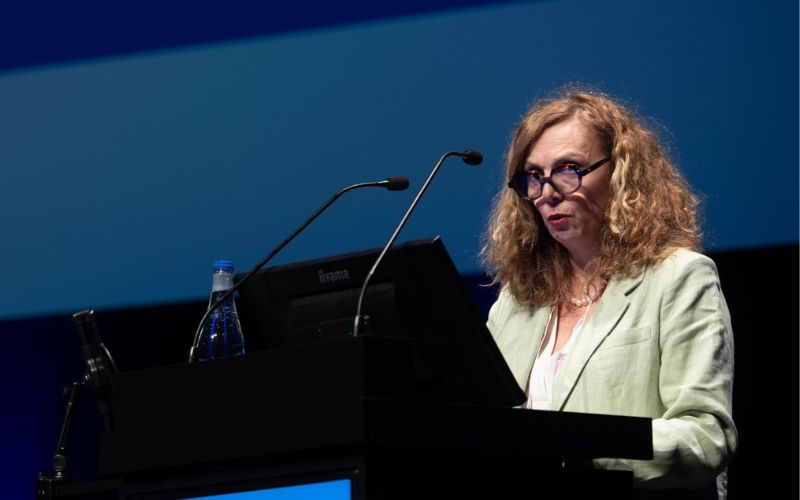
Prof. Frédéric Caux (Bobigny, France) reviewed advances in subepidermal autoimmune bullous diseases (AIBDs), focusing on bullous pemphigoid and anti-p200 pemphigoid. In bullous pemphigoid, BP180 autoantibodies drive complement activation, inflammatory cell recruitment and blister formation.
Prof. Caux highlighted emerging biologic approaches targeting type 2 inflammatory pathways, which have shown encouraging effects on itch reduction and sustained remission. He also explored the role of environmental and dynamic factors in disease onset and progression, including drugs, infections, genetic susceptibility, stress and the gut–skin microbiome axis. In anti-p200 pemphigoid, he identified laminin β4 as the principal pathogenic autoantigen, with pathogenic antibodies detectable using a newly developed laminin β4 Biochip.
What is new in diagnosis
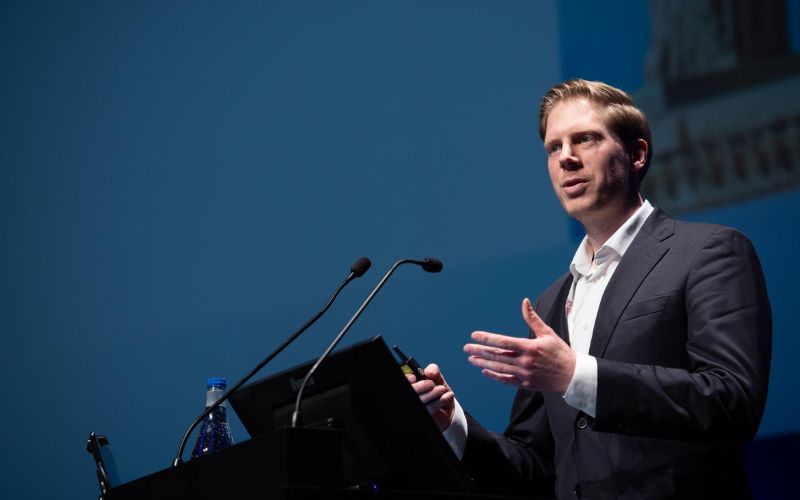
Prof. Aikaterini Patsatsi (Thessaloniki, Greece) outlined the evolving diagnostic landscape of AIBDs. Direct immunofluorescence (DIF) on perilesional skin remains the diagnostic gold standard, while DIF pattern analysis and salt-split skin techniques continue to guide disease classification and differentiate roof- from floor-binding disorders. A key advance is serration pattern analysis, with n-serrated patterns associated with bullous pemphigoid and u-serrated patterns considered pathognomonic for epidermolysis bullosa acquisita (EBA). AI-assisted serration recognition now achieves over 95% accuracy, helping reduce subjectivity and improve workflow efficiency.
Prof. Patsatsi also highlighted the growing role of multiplex BIOCHIP testing, multi-antigen ELISA platforms, novel biomarkers and AI-driven precision diagnostics.
“Modern diagnostic strategies have shifted from clinical diagnosis towards precision serology.”
New entities
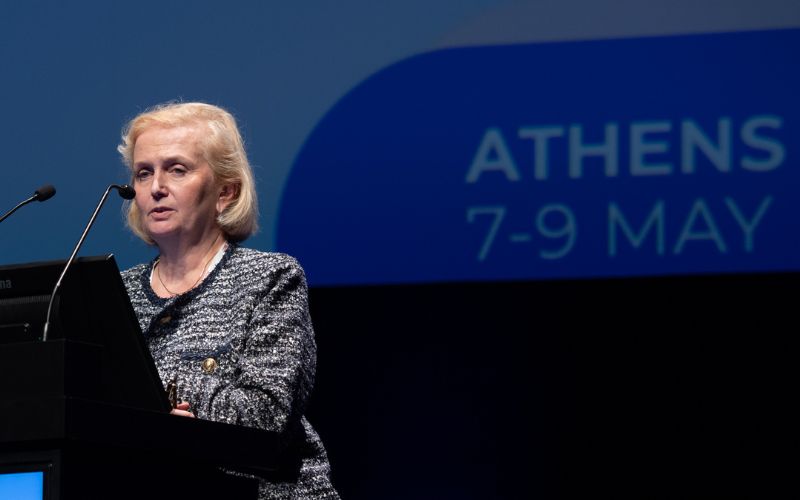
Dr. Joost Meijer (Groningen, the Netherlands) reviewed emerging entities in AIBDs. Drug-induced bullous pemphigoid was highlighted as an increasingly recognised condition associated with PD-1 inhibitors and DPP4 inhibitors. PD-1 inhibitor-associated BP was presented as a cutaneous immune-related adverse event with frequent relapse following treatment rechallenge, while DPP4 inhibitor-associated BP showed a more severe, less inflammatory phenotype.
Dr. Meijer also reviewed anti-p200 pemphigoid, including the identification of laminin β4 as a key autoantigen. He concluded by discussing the new 2026 European guideline on paediatric AIBD management, which emphasises multidisciplinary care and recognition that paediatric presentations do not always mirror adult disease.
Therapies
Dr. Branka Marinović (Zagreb, Croatia) reviewed advances and unmet needs in AIBD therapy. In pemphigus, she highlighted B-cell–targeted therapy as a major therapeutic breakthrough and current first-line approach in European guidelines. Long-term data showed improved corticosteroid-free remission and better outcomes when treatment was used earlier. She also discussed emerging evidence supporting an important role for T-cell biology and inflammatory pathways such as IL-17 and IL-21.
In bullous pemphigoid, Dr. Marinović emphasised the high disease burden in older adults and the limitations of corticosteroid-based management, including infection risk and poor tolerability. Emerging therapies targeting IgE, IL-4/IL-13, JAK and FcRn pathways may help address ongoing unmet needs.
“When we discuss therapy, we should never forget that we also need to listen to patients’ needs.”
Key takeaways
- Autoimmune bullous diseases are entering a new era of precision medicine, driven by advances in serology, biomarker discovery, AI-assisted diagnostics and the identification of novel pathogenic autoantigens.
- The treatment landscape for AIBDs is rapidly evolving beyond broad immunosuppression towards more targeted and personalised approaches.
- Despite advancements, significant unmet needs remain around long-term disease control, treatment tolerability and integrating patient needs into care and clinical trial design.