

Session type: What's new
- Friday, 8 May
- 14:00 - 15:30 EEST
Syndromic acne
Prof. Aikaterini Liakou (Athens, Greece) reviewed syndromic acne as part of a broader spectrum of autoinflammatory disease characterised by severe acne, hidradenitis suppurativa, pyoderma gangrenosum, arthritis and systemic inflammation. She shared growing evidence linking these conditions to dysregulated innate immunity, inflammasome and NF-κB pathway activation and pathogenic genetic variants. Manifestations may extend beyond the skin to include arthritis and inflammatory bowel disease-like features. Management requires a multidisciplinary, individualised approach using antibiotics, retinoids, corticosteroids, immunomodulators and targeted biologic therapies.
Prof. Liakou also discussed acne associated with polycystic ovary syndrome, highlighting the role of hyperandrogenism in acne development and treatments like antiandrogens, metformin and weight-management strategies.
Drug-induced acne
Prof. Pavel Chernyshov (Kyiv, Ukraine) discussed drug-induced acne, focusing on the expanding range of targeted oncological and immunological therapies recognised to trigger acneiform eruptions with distinct patterns, onset timing and severity profiles. EGFR inhibitor-related eruptions are particularly common and associated with favourable oncological outcomes in some settings.
Prof. Chernyshov explained that management of drug-induced acne should follow a severity-based algorithm using topical therapies, oral antibiotics, isotretinoin, corticosteroids and selective modification of the causative therapy. Furthermore, an EADV Delphi consensus supports personalised management, prophylactic doxycycline and reserving treatment discontinuation for severe or life-threatening cases.
“Left untreated, acneiform drug eruptions can significantly affect patient self-esteem and quality of life, leading to poor treatment adherence and suboptimal disease control.”
Acne scar management
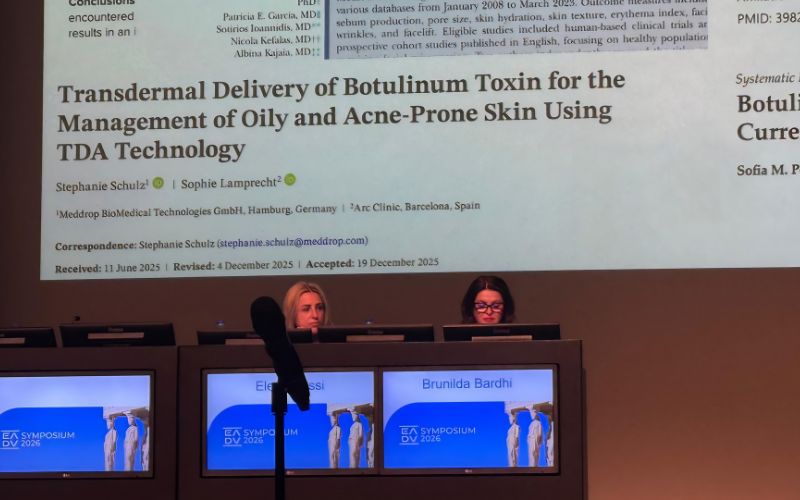
Dr. Brunilda Bardhi (Tirana, Albania) presented acne scarring as a major psychosocial and therapeutic challenge affecting both adolescents and adults. She outlined key mechanisms driving scar formation, including persistent inflammation, sebaceous gland destruction and poor wound healing, alongside risk factors such as delayed treatment, disease relapse, genetic predisposition and increased BMI. Acne scar management is highly individualised, requiring treatment selection based on scar morphology, severity, skin type, patient expectations and social circumstances.
Dr. Bardhi reviewed chemical peels, microneedling, subcision, injectables, platelet-rich plasma, radiofrequency devices and ablative and non-ablative laser therapies, often used in combination to optimise outcomes. She concluded by highlighting growing evidence supporting multimodal laser-based approaches.
“The best way to reduce acne scarring is prevention”
New treatments
Prof. Christos Zouboulis (Dessau, Germany) reviewed new and emerging treatments for acne vulgaris, describing acne as a chronic inflammatory disease of the pilosebaceous unit. Among established therapies, personalised-dose oral isotretinoin was highlighted as the optimal systemic regimen, balancing effective clearance, tolerability, short treatment duration and low relapse rates. Oral hormonal antiandrogens have also demonstrated progressive long-term improvement in facial and truncal acne. Newer therapies include sarecycline, topical minocycline foam, clascoterone cream, trifarotene and fixed-dose triple topical combinations.
Looking ahead, Prof. Zouboulis discussed 1726 nm lasers targeting sebaceous glands, PPARγ-modulating topical therapy, soluble microneedle nanoparticle delivery systems and an mRNA acne vaccine targeting specific strains of P. acnes, now in early-stage clinical trials.
Key takeaways
- Acne is increasingly being understood as a heterogeneous inflammatory disease spectrum, spanning autoinflammatory syndromes, treatment-related acneiform eruptions, hormonal drivers and chronic psychosocial burden.
- Early, individualised and multimodal treatment remains central to improving long-term outcomes, with prevention of scarring, preservation of quality of life and emerging targeted and biologic therapies shaping the future of acne management.